Mattress literacy · Research guide
What to Examine When Researching the Vispring Diamond Majesty
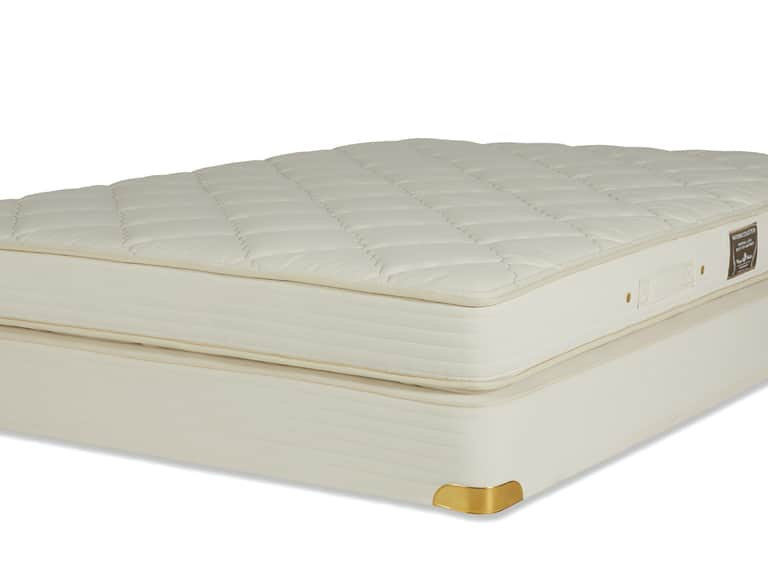
A luxury mattress is more than a name, a price, or a promise of exceptional sleep. To understand the Vispring Diamond Majesty, look past the language of refinement and examine the details that can be checked: its current specifications, materials, construction, size options, care requirements, and the terms that govern a purchase.
Published November 17, 2026
Researching a high-end mattress can feel like entering a world where nearly every product is described as handcrafted, supportive, breathable, or made from premium materials. Those words may point toward real qualities, but they do not explain how a mattress is built or whether its feel is right for a particular sleeper. The Vispring Diamond Majesty is a useful case study in how to approach luxury mattress research: begin with what can be verified, then assess what the facts may mean for comfort and daily use.
This guide does not assume that a model name alone settles the matter. Product details can change by year, market, size, or retailer, and information available in one listing may not match the latest manufacturer specification. The most reliable approach is to confirm current details from the manufacturer or an authorized seller, record what is stated, and identify what remains unclear before drawing conclusions.
That process matters whether you are comparing the Diamond Majesty with another Vispring mattress or simply learning how to read luxury mattress specifications. The goal is not to decode a marketing story. It is to build a practical picture of what you would be sleeping on, what support it may offer, what care it requires, and what questions deserve an answer before you commit.
Start with current, model-specific information
First confirm that the information you have actually refers to the Vispring Diamond Majesty. Mattress names can be similar, and product pages may combine details from a collection, an earlier version, or a neighboring model. A retailer’s summary may be useful for orientation, but a short description is not always a complete specification.
Check the model name, the date the page was updated, the country or market to which it applies, and whether the description covers the exact size you are considering. If a page uses broad phrases such as “natural fillings” or “handmade construction,” look for a technical specification that identifies materials more precisely. If two current sources disagree, ask the seller to confirm which information applies to the mattress being quoted.
Keep a simple research record. Note the source, date, model, size, and any claims that need clarification. This is especially useful when comparing listings, because apparent differences may reflect updates or regional variations rather than true differences between products. A dated record also helps prevent a polished but obsolete product page from becoming the basis for a decision.
- Model identity: Is the listing explicitly for the Diamond Majesty, rather than another Vispring model?
- Source and date: Is the information current, and does it come from the manufacturer or a retailer?
- Market: Does it describe the version sold in your location?
- Completeness: Does the page provide construction and care details, or only general promotional language?
- Confirmation: Can the seller verify any unclear specification in writing?
Read the materials list as a specification, not a slogan
Materials shape how a mattress is made and maintained, but a material name on its own does not reveal the full construction. When researching the Diamond Majesty, look for a component-by-component account of what is used in the comfort layers, support system, upholstery, and outer cover. Ask whether the published description names the materials clearly and gives enough context to understand where each one appears.
Terms such as wool, cotton, horsehair, silk, or natural latex can appear in luxury mattress descriptions, but their presence and role should never be inferred from a brand’s general reputation or from the model’s price. Confirm which materials are stated for this particular model and whether the description identifies quantities, layers, or placement. If the specification says “natural fillings” without further detail, that is a prompt to ask for clarification, not a reason to assume a specific composition.
Also distinguish a material claim from a certification claim. Words such as “natural,” “organic,” “chemical-free,” or “sustainable” have different meanings and do not automatically establish a product’s full contents or environmental impact. If a certification is relevant to your decision, check what the certification covers, which component it applies to, and whether the product or material is named in the certifier’s documentation. Avoid treating a general statement as proof of a particular standard.
Material transparency can be important for people who have allergies, sensitivities, or specific preferences about animal-derived fibers. A listing may not answer every question about processing, sourcing, or possible allergens. In those cases, ask the manufacturer or retailer for the information directly. If a health concern is significant, consult an appropriate health professional rather than relying on a mattress description to make a medical determination.
Understand the construction from top to bottom
The word “construction” refers to how the layers and support components work together. A useful mattress specification should explain more than the headline material. Look for a description of the comfort layers, the core or spring system, the upholstery layers, and the cover. If there are different firmness options or configurations, establish whether they change the internal build or only the surface feel.
For a spring mattress, the coil design is one important part of the picture. Find out whether the specification identifies the type of spring unit, its arrangement, or other relevant structural details. The number of coils, where provided, should be interpreted carefully: counting conventions can differ, and a larger number alone does not demonstrate that a mattress will be more comfortable, durable, or supportive. Ask what the figure counts and how the system is intended to function.
Layer thickness and total mattress height can also matter. Height may affect the fit of sheets, the overall bed height, and compatibility with a frame or headboard. It does not, by itself, tell you how well a mattress will support your body. When dimensions are listed, confirm whether they refer to the finished mattress and whether they may vary by size or construction.
Questions about edge support, motion transfer, and turning or rotating should be answered with care. These are practical performance characteristics, but a generic claim is not a substitute for an explanation of construction or an in-person assessment. Ask what the manufacturer recommends for setup and maintenance, and whether the mattress is designed to be rotated, turned, or used in a particular orientation. Do not assume that a mattress is reversible simply because it has a substantial build.
Translate comfort language into your own needs
Luxury mattress listings often use words like “plush,” “medium,” “firm,” and “supportive.” These terms can help describe an overall impression, but they are not universal measurements. Two manufacturers may use the same firmness label for mattresses that feel quite different, and one person’s preferred surface may feel too soft or too rigid to another.
Start with your own sleeping habits rather than the product’s adjectives. Consider whether you usually sleep on your side, back, stomach, or a combination of positions. Think about where you experience pressure or discomfort, whether you tend to sleep warm, and whether you share the bed. These are useful prompts for a conversation with a knowledgeable seller, but they do not predict with certainty how you will feel on a particular mattress.
Support and surface comfort are related but not interchangeable. A mattress may have a cushioned top layer while still providing a stable underlying structure; another may feel firm immediately but not suit a sleeper’s pressure-relief preferences. Rather than treating firmness as a quality ranking, consider whether the mattress keeps you comfortable in your usual positions and whether your body feels adequately supported over a full night.
If you can try the Diamond Majesty in person, spend enough time on it to notice more than the first impression. Lie in your usual positions and pay attention to pressure at the shoulders, hips, and other areas where you tend to feel discomfort. If you share the bed, evaluate it together where possible. A brief showroom test cannot recreate weeks of use, so clarify the home trial or return policy before purchase.
For online research, ask whether the seller can explain how comfort options are selected, whether the options differ by size, and what happens if the feel is not right. Avoid assuming that a model name or premium price guarantees a particular level of comfort. Comfort is personal, and even a detailed specification cannot replace the experience of sleeping on the mattress.
Compare like with like
Comparison becomes more useful when the questions stay consistent. A luxury mattress can be difficult to evaluate against another model if one retailer publishes detailed construction information while another offers only a few broad claims. Build a comparison around facts that are available for both mattresses, and mark missing information rather than filling gaps with assumptions.
Consider comparing materials by layer, support system, total height, comfort options, size availability, recommended foundation, maintenance instructions, warranty, delivery arrangements, and return terms. If a particular specification is not disclosed, note that limitation. Transparency is itself useful information: a missing detail does not prove a product is poor, but it does make a direct comparison harder.
When assessing price, compare the complete cost of the purchase rather than the mattress alone. Delivery, installation, removal of an old mattress, taxes, foundation requirements, and other services may affect the total. Clarify whether any quoted price applies to the exact size and configuration you need. A price without those details can make two offers look more comparable than they are.
Do not rely on a single number or feature as a shortcut. Coil count, mattress height, a high-end material, or a long warranty may be relevant, but none can independently establish comfort, longevity, or value. The best comparison is a transparent one: it shows what each model contains, what the claims mean, and what questions remain unresolved.
Check size, foundation, and room fit
Before narrowing in on comfort, confirm that the mattress fits the bed and the room. Check the exact dimensions for the size you intend to order rather than relying on a familiar label such as queen or king. Size names can be standardized in many markets, but measurements and product configurations may still differ. Confirm the mattress dimensions and the frame or foundation dimensions together.
Ask what kind of base the manufacturer recommends and whether there are restrictions on slat spacing, adjustable bases, or other support systems. Foundation compatibility can affect setup and may be relevant to warranty conditions. If your existing bed base is older or unusual, describe it to the seller and request specific guidance. Do not assume that a mattress will work properly on every frame simply because it physically fits.
Measure access routes as well as the bedroom: staircases, hallways, doorways, elevators, and tight turns can affect delivery. Confirm whether the mattress is delivered in a particular format, whether setup is included, and whether the delivery team can access the intended room. A product that fits the bed but cannot be moved through the building creates a preventable problem.
Treat care instructions as part of the product
Care requirements influence what ownership looks like after delivery. Look for clear instructions on whether the mattress should be rotated, turned, protected with a cover, or cleaned in a particular way. Confirm what the manufacturer says about moisture, stains, spills, and routine airing. Avoid applying cleaning products or household methods unless the manufacturer says they are appropriate; an incorrect approach could damage materials or affect warranty coverage.
Find out whether the cover is removable and washable, and do not infer that it is simply because a zipper is visible. Many mattress covers are not intended to be removed by the owner. If the care page is vague, ask for written instructions before purchase. A washable protector may help guard against ordinary spills and wear, but its presence does not make the mattress itself washable.
Ask what the warranty covers and what it excludes. A warranty is not the same as a comfort guarantee, trial period, or return policy. Read the terms for any requirements concerning the foundation, mattress protection, stains, visible impressions, or proof of purchase. If the seller offers a trial, clarify its duration, condition requirements, collection fees, and refund process. These policies can vary substantially, so verify the terms attached to the specific sale.
Ask direct questions before deciding
A focused set of questions can turn a broad product page into information you can use. The aim is not to challenge every claim, but to make sure the answers are specific to the Diamond Majesty and the configuration you are considering.
- What are the current, model-specific materials and construction details?
- Do the specifications vary by size, market, or version?
- Which firmness or comfort options are available, and how are they described?
- What foundation or base does the manufacturer recommend?
- How should the mattress be maintained, and may it be turned or rotated?
- What are the warranty conditions, trial terms, and return costs?
- What is included in delivery, setup, and old-mattress removal?
- Can the seller provide written confirmation of details that are not published?
Clear answers should be concrete enough to verify. If a response circles back to general phrases about quality or luxury without addressing a technical question, ask again in a narrower way. For example, instead of asking whether the mattress uses “natural materials,” ask for the names of the materials and the parts of the construction in which they are used.
A practical checklist for mattress research
Before making a decision about the Vispring Diamond Majesty, use this checklist to separate confirmed information from impressions:
- Identity: Confirm the exact model and the version currently offered.
- Materials: Record the named components and where they appear in the construction.
- Structure: Understand the support system, comfort layers, and finished height.
- Comfort: Relate available options to your sleep position and personal preferences, without treating labels as universal measurements.
- Fit: Verify mattress dimensions, base compatibility, and delivery access.
- Care: Obtain current cleaning and maintenance instructions.
- Terms: Read warranty, trial, return, delivery, and removal conditions.
- Evidence: Save the date and source for specifications, and request written clarification where needed.
This process does not produce a single score that can announce the “best” mattress. It produces something more useful: a clear account of what is known, what is personal, and what still needs checking. In a market where polished language can make products sound remarkably alike, that distinction is the foundation of an informed decision.
The larger lesson in luxury mattress research
Researching the Vispring Diamond Majesty is ultimately an exercise in separating evidence from expectation. A model name may draw attention, but the details that matter are the ones connected to construction, comfort, fit, care, and purchase terms. Manufacturer specifications can establish what a product is made from; they cannot promise that every sleeper will find it comfortable.
For readers in Kansas City and elsewhere, the same method applies across brands and price ranges. Seek current, model-specific information. Compare matching facts. Treat comfort as an individual experience, not a marketing label. And give practical matters—such as the base, delivery, cleaning, and return policy—the same attention as the materials list.
The result is a more grounded way to consider a luxury mattress: not as an object whose reputation makes questions unnecessary, but as a carefully specified sleep surface that deserves close reading. The details may be quieter than the sales language. They are also where an informed choice begins.